← Home · Underground Excavations

Soft Ground Tunneling in Manchester, NH: Geotechnical Analysis That Avoids Costly Surprises

Together, we solve the challenges of tomorrow.

LEARN MORE →

In Manchester, the biggest variable we deal with isn't the TBM, it's the legacy of Glacial Lake Hitchcock. You can be driving through stiff till and suddenly hit ten feet of varved clay that behaves more like a fluid than a soil. Our team has seen too many projects stall because the pre-construction investigation stopped at the bedrock depth without characterizing the fine-grained lacustrine deposits that dominate the Merrimack River valley. When you're planning a tunnel under Elm Street or near the Millyard, the conversation has to start with pore pressure dissipation rates and undrained shear strength. We combine in-situ permeability tests with advanced lab work to give contractors a realistic picture of stand-up time and face stability before the first cut.

Manchester's varved clays lose up to 60% of their undrained shear strength when disturbed — remolding sensitivity is the hidden risk in every tunnel drive through this city.

Methodology and scope

The USGS surficial geology map for Manchester shows a complex sequence of glacial outwash, marine clay, and recent alluvium along the Merrimack corridor. What that means underground is a rapid transition zone where granular, water-bearing lenses sit directly above sensitive fat clay. We've measured groundwater within six feet of surface in the river plain during spring thaw — a critical factor for any shallow tunnel or cut-and-cover box. Our standard analysis protocol for soft ground tunnels follows IBC Chapter 18 and references ASTM D1586 for SPT energy calibration and ASTM D2487 for unified soil classification, but we go further by running consolidated-undrained triaxial tests at in-situ confining pressures to capture the strain-softening behavior typical of these lacustrine clays.
Soft Ground Tunneling in Manchester, NH: Geotechnical Analysis That Avoids Costly Surprises
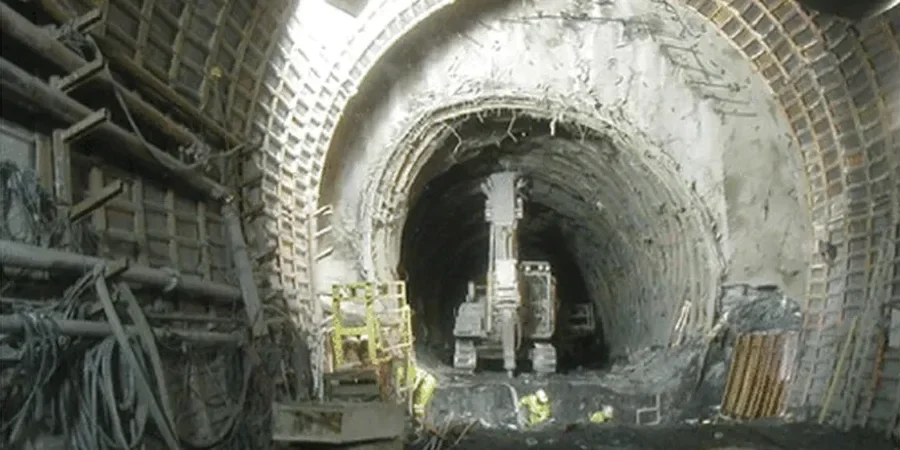
Technical reference image — Manchester New Hampshire

Local geotechnical context

IBC Section 1810 and ASCE 7-22 load combinations are not optional in Manchester — they are the baseline defense against a geological setting where tunnel face collapse can propagate to the surface in minutes. The risk we emphasize to every client is the combination of low effective stress and high sensitivity in the varved clays exposed at tunnel springline. A localized face instability can trigger progressive failure through a process similar to quick clay behavior, which is well-documented in New England glacial deposits. We also assess the potential for construction-induced settlement under historic brick mill buildings, many of which sit on shallow timber-pile foundations that are sensitive to groundwater drawdown. Our analysis quantifies the radius of influence of dewatering and the expected volume loss so that grouting programs and contingency plans are based on numbers, not assumptions.

Need a geotechnical assessment?

Reply within 24h.

Email: contact@geotechnical-engineering.vip

Reference parameters

ParameterTypical value
Undrained Shear Strength (su) of varved clay15–40 kPa (depending on OCR)
Sensitivity (St) of lacustrine deposits4–12 (medium to highly sensitive)
Preconsolidation pressure (σ'p) at tunnel invert80–200 kPa
Average groundwater depth (river plain area)1.5–2.5 m below surface
Permeability of outwash sand layers1×10⁻³ to 1×10⁻⁴ cm/s
Face stability number (N) target< 6 for open-face operation

Complementary services

01

Tunnel Face Stability and Stand-Up Time Analysis

We calculate stability numbers and expected deformation for each drive length, accounting for the layered stratigraphy of glacial lake deposits. This includes pore pressure distribution modeling and recommendations for face support pressure if an EPB machine is planned.

02

Settlement Trough and Building Damage Assessment

Using volume loss estimates calibrated to local case histories, we predict surface settlement profiles and assess the risk of angular distortion for adjacent structures, particularly the unreinforced masonry buildings common in the Amoskeag Millyard district.

03

Groundwater Control and Depressurization Design

We design and interpret pumping tests to define the hydraulic boundary conditions for the tunnel, specifying the required drawdown and the zone of influence to protect nearby water supply wells and prevent consolidation settlement in compressible clay layers.

Reference standards

IBC 2021 (Chapter 18: Soils and Foundations), ASCE 7-22 (Minimum Design Loads for Buildings and Other Structures), ASTM D1586 (Standard Test Method for SPT and Split-Barrel Sampling), ASTM D2487 (Unified Soil Classification System), ASTM D4767 (Consolidated-Undrained Triaxial Compression Test)

Frequently asked questions

What is the typical cost range for a geotechnical site investigation before a soft-ground tunnel project in Manchester?

Based on the scope of drilling, in-situ testing, and advanced lab work needed to characterize Manchester's glacial lake deposits, a complete pre-construction geotechnical investigation for a tunnel project typically ranges from US$4,190 to US$14,350. The final figure depends on the number of boreholes, depth to bedrock, and the laboratory testing program required.

How do varved clays affect tunnel boring machine performance in New Hampshire?

Varved clays create two main problems for TBMs: first, the alternating silt and clay layers cause uneven cutterhead torque and can clog the cutting wheel; second, the clay's high sensitivity means excessive remolding at the face can turn the material into a slurry that is difficult to control with screw conveyor pressure. Conditioning agent compatibility testing is essential.

What is the minimum depth for a tunnel to avoid surface settlement in Manchester's river plain?

There is no single minimum depth — it depends entirely on the undrained shear strength profile and the tunnel diameter. In the Merrimack River floodplain, we typically see that a cover-to-diameter ratio of at least 2.0 is needed to keep volume loss below 1%, but this must be verified with numerical modeling for each specific alignment.

Do you need to test for liquefaction in Manchester for a tunnel project?

Liquefaction is generally not the primary concern for tunnels in Manchester because the critical layers are cohesive varved clays. However, if the tunnel alignment passes through saturated outwash sand lenses — which are common — we evaluate cyclic softening potential and the risk of buoyancy-induced flotation during a seismic event per ASCE 7-22 requirements.

How long does a complete soft-ground tunnel geotechnical analysis take from start to finish?

A full investigation — from mobilizing the drill rig to delivering the Geotechnical Baseline Report — typically takes 6 to 10 weeks. The critical path is usually the consolidation and triaxial testing program, which requires several weeks for pore pressure equalization and shearing at realistic strain rates for these sensitive clays.
Location and service area

We serve projects in Manchester New Hampshire and surrounding areas.

View larger map