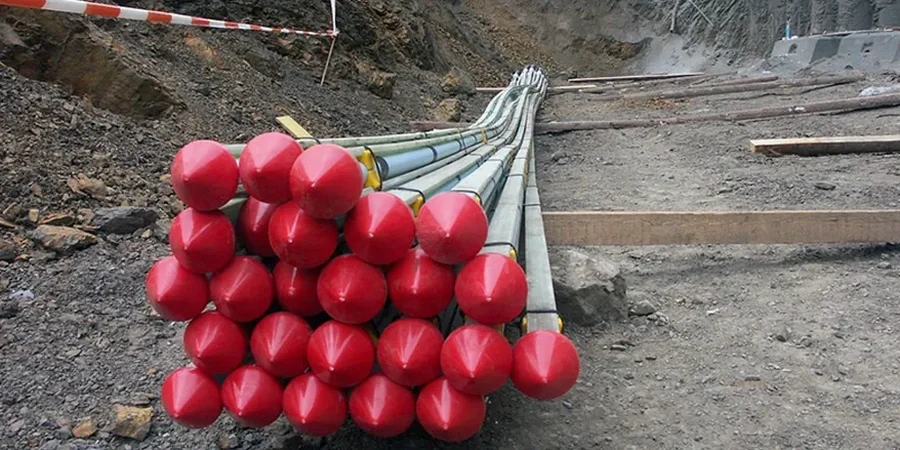
Manchester sits on a complex mix of dense glacial till and varved clays left by Lake Hitchcock. The west side near the Merrimack River often hits refusal at 15 to 20 feet, while the eastern plateau can hide soft seams at depth. Anchor design here is not a catalog exercise. You need load transfer data from the actual stratum where the bond zone will lock in. We run CPT soundings to map the till interface continuously, and then correlate with grain size analysis from disturbed samples to confirm friction angles before selecting the tendon type and bond length.
A passive anchor in varved clay can lose 12 percent of its lock-off load in the first six months. We test for that.
Process overview
In Manchester, many times we see contractors trying to use a single anchor type across the whole site. That works until you cross the till-clay transition and the grout takes twice the volume without gaining capacity. Active anchors, stressed to 70-80 percent of the tendon yield, suit the dense till zones where creep is negligible. Passive anchors, proof-tested only to design load, work better in the clay pockets where long-term relaxation is real. We specify double corrosion protection per IBC Chapter 18 for permanent installations, especially near the river where groundwater is aggressive. Our field crew runs performance tests on sacrificial anchors before production drilling begins, loading to 133 percent of design load per PTI recommendations. No shortcuts. The bond zone gets sized from the weaker stratum within the fixed length, never averaged.
Local geotechnical context
The difference between a retaining wall on Elm Street and one near the airport is night and day. Downtown, you are in dense lodgement till: anchors lock in fast, creep is almost zero, and active stressing is the efficient choice. Near the airport, the soil profile shifts to sand and silt layers with a water table at 8 feet. The biggest risk we see in Manchester is progressive anchor failure in multi-row tieback walls. One anchor loses load, the row above picks up more, and the wall tilts forward. This cascades fast. We catch it during lift-off testing, not after the wall cracks. When we design in the clay pockets on the east side, we include lock-off load verification at 7 and 30 days post-stressing. The slope stability analysis must consider the anchor free length extending well past the critical failure surface, not just the minimum 15 feet.
Top questions
What is the difference between active and passive anchors?
Active anchors are stressed to 70-80 percent of the tendon yield strength after installation. This preloads the ground and limits movement. Passive anchors are installed without stressing. They only develop resistance when the structure moves and loads them. In Manchester, we use active anchors in dense till where creep is minimal and passive anchors in clay zones where long-term relaxation could reduce lock-off load.
How much does anchor design and testing cost for a Manchester project?
Design and testing costs typically range from US$940 to US$3,300 depending on the number of anchor rows, the complexity of the soil profile, and the required testing protocol. A single-row tieback wall with three performance tests falls at the lower end. Multi-row permanent anchors with long-term monitoring and double corrosion protection run at the upper end.
What soil conditions in Manchester affect anchor capacity?
Glacial till on the west side provides excellent bond. Varved clays and silts on the east side and near the airport present lower ultimate bond stress and higher creep potential. We run CPT soundings and grain size tests to map the till-clay interface before sizing the bond zone. The Merrimack River corridor also has aggressive groundwater requiring double corrosion protection.
What testing do you perform on anchors?
We follow PTI DC-35 recommendations. Performance tests run on sacrificial anchors before production: load to 133 percent of design, hold 10 minutes, measure creep. Production anchors get proof tests at 133 percent with a 10-minute hold. For passive anchors in clay, we add 7-day and 30-day lock-off load verification to catch relaxation early.
Do you need a building permit for tieback anchors in Manchester?
Yes. Tieback anchors extending beyond the property line require an easement. The design must be sealed by a professional engineer and submitted under IBC 2021 Chapter 18. We prepare the full calculation package, including bond zone verification and corrosion protection details, ready for city review.