← Home · Underground Excavations

Geotechnical Design of Deep Excavations in Manchester, NH

Together, we solve the challenges of tomorrow.

LEARN MORE →

Manchester’s growth from a textile powerhouse along the Merrimack River to a modern regional hub has layered complex infrastructure over challenging glacial geology. Beneath the surface of the Queen City, dense till deposits, coarse outwash sands, and occasional marine clays create a demanding environment for any vertical cut exceeding 20 feet. When a project calls for a multi-level parking structure downtown or a utility vault adjacent to century-old brick buildings, standard trench safety measures are simply insufficient. The geotechnical design of deep excavations in Manchester requires a careful synthesis of subsurface data from CPT testing and laboratory strength parameters to predict wall deflections and bottom heave before the first bucket of soil is removed. Our laboratory team processes undisturbed samples from local borings to deliver the stiffness and strength inputs that make these analytical predictions reliable, helping contractors avoid costly surprises in the city’s variable overburden.

In Manchester’s coarse glacial outwash, a properly instrumented excavation design can reduce wall movements by up to 50 percent compared to prescriptive solutions.

Methodology and scope

With Manchester’s population exceeding 115,000 and its downtown elevation sitting roughly 200 feet above the river, excavation designers must contend with a water table that often fluctuates dramatically within the coarse glaciolacustrine strata. A critical input for any shoring analysis is the lateral earth pressure distribution, which we derive from consolidated-undrained triaxial tests on Shelby tube samples retrieved from the project’s target depth. The geotechnical design of deep excavations across New Hampshire’s largest city frequently integrates soldier pile and lagging systems or secant pile walls when groundwater cutoff is non-negotiable. Because the IBC references ASCE 7 for earth pressure calculations, our parameter selection follows these codes rigorously. For sites near the river where artesian conditions can develop, we also recommend coupling the excavation design with an in-situ permeability assessment to calibrate dewatering requirements. The resulting report provides the contractor with a clear staged excavation sequence, including berm setbacks and strut pre-load specifications tailored to Manchester's layered drift.
Geotechnical Design of Deep Excavations in Manchester, NH
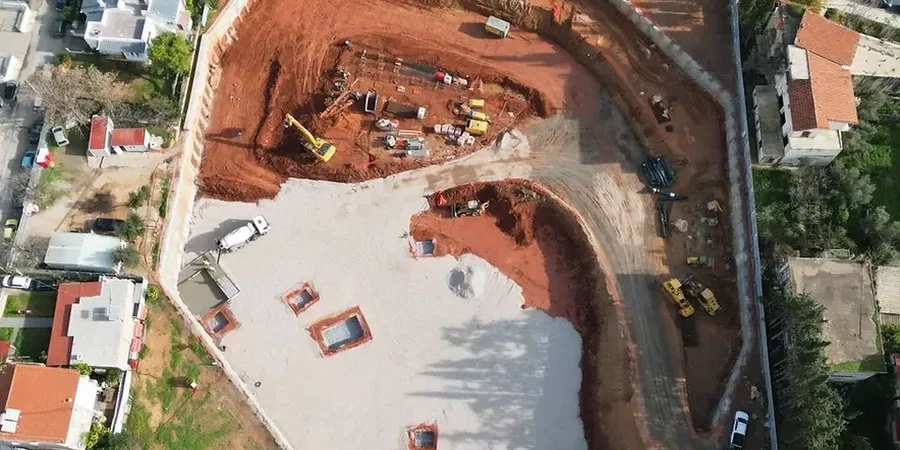
Technical reference image — Manchester New Hampshire

Local geotechnical context

A recent excavation for a medical office building on the east side of Manchester encountered a lens of saturated fine sand at 28 feet that had not been fully characterized during the preliminary geophysics. The initial cut triggered localized sloughing behind the soldier piles, delaying the project by three weeks while a revised underpinning sequence was engineered. That situation illustrates a hard truth: the geotechnical design of deep excavations in Manchester must account for abrupt facies changes typical of New England’s glacial depositional environment. When basal instability threatens adjacent structures—common near the narrow lots of Amoskeag-era mill yards—we perform undrained shear strength profiling and feed those parameters into slope stability models to confirm the excavation base will not heave. This proactive approach, backed by laboratory consolidation data, gives the shoring designer the confidence to specify tieback anchors or internal bracing without overconservative assumptions that inflate project costs.

Need a geotechnical assessment?

Reply within 24h.

Email: contact@geotechnical-engineering.vip

Video resource

Reference parameters

ParameterTypical value
Applicable Code (Earth Pressure)IBC 2021 / ASCE 7-22 Section 3.2
Soil Shear Strength TestingASTM D4767 (CU Triaxial)
Typical Soil Unit Weight (Till)125 – 145 pcf
Groundwater Cutoff Wall TypeSecant Pile or Soil Mix Wall
Design Wall Friction AngleSite-specific from lab testing
Analysis MethodBeam on elastic foundation (FEM)
Factor of Safety (Basal Heave)Minimum 1.5 per OSHA guidelines

Complementary services

01

Advanced Shear Strength Evaluation

Consolidated-undrained and drained triaxial compression tests on undisturbed specimens from Manchester’s glacial till and outwash, providing the effective stress friction angle and cohesion intercept required for calibrated wall design.

02

Heave and Groundwater Analysis

Integration of laboratory consolidation data and field permeability measurements to predict excavation base stability and design dewatering systems that prevent blowout in the Merrimack River valley.

Reference standards

IBC 2021 (Chapter 18 Excavations), ASCE 7-22 Minimum Design Loads, ASTM D4767 CU Triaxial, OSHA 1926 Subpart P (Excavations)

Frequently asked questions

What is the typical cost range for a deep excavation design in Manchester, NH?

For a standard commercial excavation in Manchester, the geotechnical design fee typically ranges from US$2,360 to US$9,210, depending on the cut depth, proximity to adjacent structures, and the complexity of the required laboratory testing program.

How do Manchester’s glacial soils affect excavation wall selection?

The city’s dense basal till can support steep cuts for short periods, but overlying coarse outwash sands and the high groundwater table near the Merrimack often demand a water-tight system like secant piles. We run triaxial and permeability tests on local samples to determine if a cantilevered soldier pile wall will suffice or if a multi-level anchored system becomes necessary.

What laboratory tests are essential before designing a shoring system here?

At minimum, we perform ASTM D4767 consolidated-undrained triaxial tests for strength, Atterberg limits to classify the fines content in the till, and consolidation tests to estimate settlement behind the wall. For excavations below the water table, a constant-head permeability test on the granular strata is also critical to size the dewatering system accurately.

How long does the design and testing phase take for a deep excavation in Manchester?

After the field investigation, our laboratory typically requires two to three weeks to complete the advanced strength and consolidation testing. The engineering analysis and final stamped report, which includes staged excavation drawings and monitoring specifications, usually follow within an additional two weeks.
Location and service area

We serve projects in Manchester New Hampshire and surrounding areas.

View larger map